The Types of Friendship I Never Knew Existed — Until Someone Described the Circles
In a session for parents in the last week, a therapist described an activity — a relationship chart — for me to do together with one of my kids. Talking it through, I realised I’d never properly understood the thing it was quietly teaching.
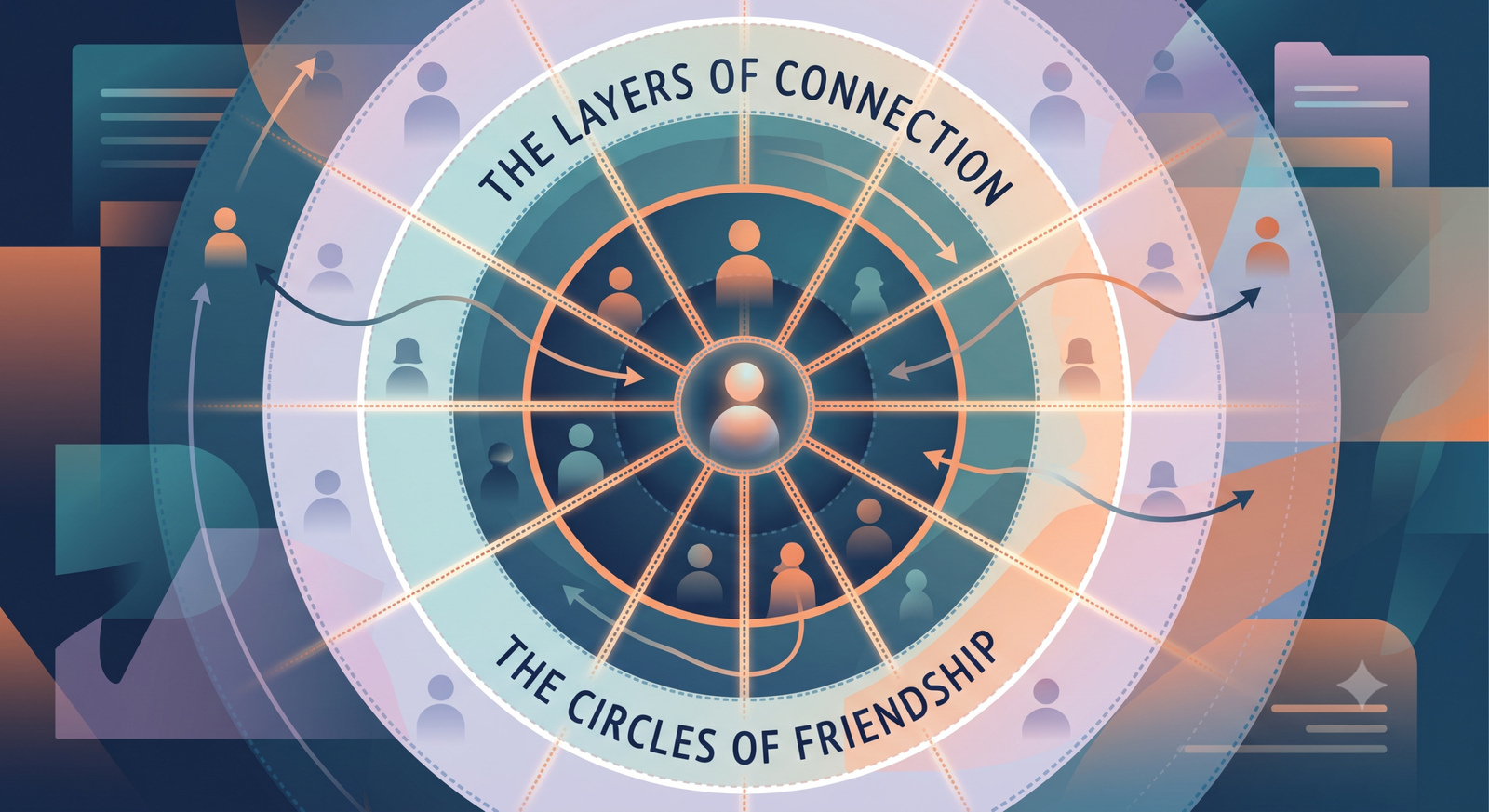
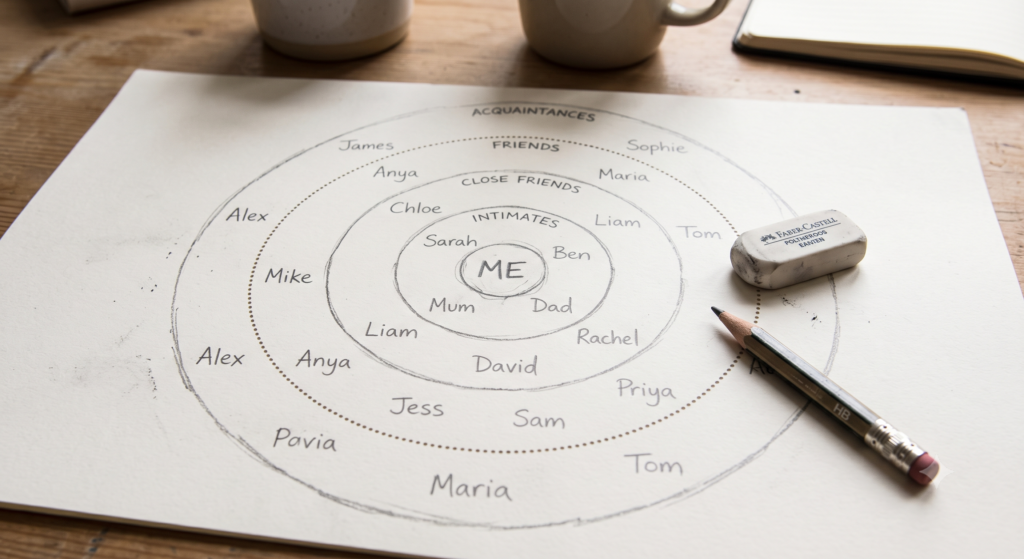
The idea is simple. You draw a circle with yourself in the middle, then rings around you. The people closest to you sit in the innermost ring, and the further out a ring is, the more distant the relationship — family and closest friends near the centre, the person who cuts your hair somewhere out towards the edge. And — this is the bit that got me — the ring lines are perforated, dotted rather than solid, because people are meant to move. Inward, outward, as relationships change.
It was meant as something to do with a child. It landed squarely on me.
Everyone filed under “friend”
Because here’s what the chart quietly exposed. I’ve never really had separate mental categories for acquaintance, colleague, and close friend — everything went in together under one label, friend, and collapsing the whole social world into a single tier is a fast route to expecting far too much of people who were only ever meant to be in the outer rings.
I think this is the engine behind two things I’ve always done and never understood. One: expecting a depth of loyalty and attention from people who, looking back, were people I’d quietly promoted to inner-ring best friends in my own head. Two: the oversharing. If you’ve got no inner sense of relational distance, you pour inner-ring intimacy onto an outer-ring acquaintance, watch their face do something complicated, and then swim home in the shame that rejection sensitivity drags in for the next three days. Not a moral failing. A missing filing system.
The outer rings aren’t failed friendships
For years I think I read the outer rings as a kind of defeat — proof I couldn’t convert people into “proper” friends.
But an acquaintance or a colleague isn’t a friendship that failed to launch; it’s a legitimate kind of connection with its own quiet value. There’s research on “weak ties” — the loose, easy connections of neighbours, regulars, familiar faces — showing these lighter bonds genuinely matter for autistic people’s wellbeing, precisely because they ask so little of us: no performance to keep up, no upkeep, just a warm hello in passing. The person you nod to on the school run isn’t a diminished friend. They’re a fully-fledged member of an outer ring, doing exactly the job an outer ring is for.
Naming that took a surprising weight off. Some relationships are supposed to stay near the edge. The chart wasn’t asking me to drag everyone inward. It was giving me permission to let the edge be the edge.
The work friends who faded (an outer ring mistaken for an inner one)
When I applied the chart backwards to my own life, the grief of the last couple of years suddenly made a different kind of sense.
I left a job I’d been in for twenty years, and I felt the friendships start to dissolve almost before the door shut. It was properly painful — I’d have told you those were some of my closest people. But the honest read, ring by ring, is that most of them were middle-ring connections held up by shared logistics: proximity, the daily grind, the corridor chat. When the shared context goes, a situational friendship usually goes with it — not because the bond was fake, but because it was scaffolded by a building rather than by choice. I’d filed them as inner-ring and grieved them as inner-ring, when the chart says they were something else, and something real, all along.

Perforated lines: people are allowed to move
The dotted rings are the part I keep coming back to, because they build in the thing I most needed permission for — relationships are not fixed; a name can migrate inward as trust grows, or drift outward as a context ends, and neither is a failure.
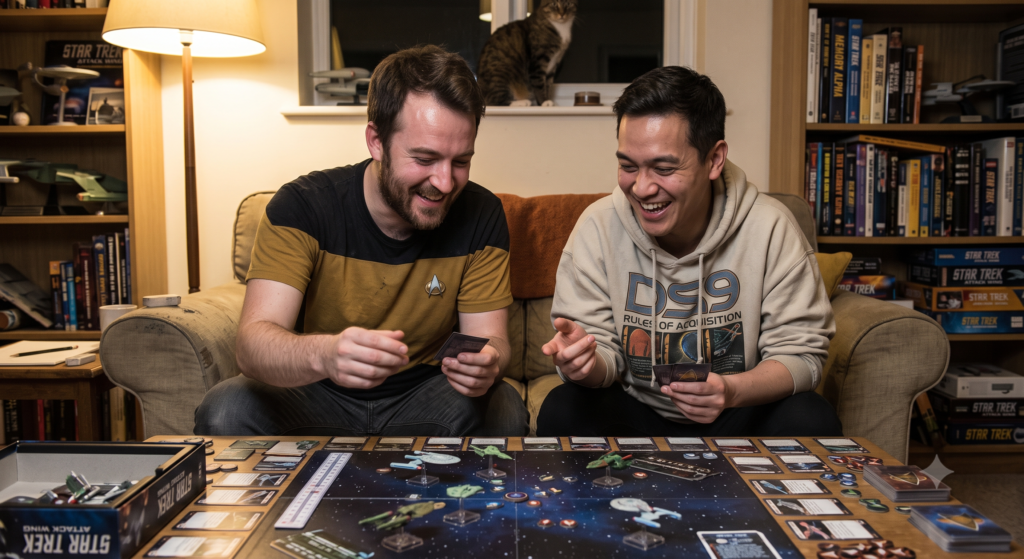
It also explains why some connections slide inward so much faster than others. Making friends who are also gay, for instance, lets me drop a whole layer of the double mask I wear as an autistic and gay man — less code-switching, less translating, so intimacy arrives quicker. And when I do land in an inner ring, it tends to be deep, because I have a monotropic mind built for few-and-deep rather than wide-and-shallow. The research backs the pattern: autistic people build rapport just as easily with each other — the friction shows up in the mixed pairing, on both sides, not inside me. Meanwhile camouflaging in pursuit of friendship is exhausting and often doesn’t even work, which is exactly why the low-mask connections are the ones that make it to the middle.
The chart’s still up
No tidy bow. I’m not suddenly fluent in friendship because I’ve drawn a few circles on a page.
But I’ve got names to move. Some relationships I can finally let sit further out without reading the distance as a failure. A couple of people I’m reaching back out to, half-deleted messages and all, to see if they want to come closer. And the small handful who’ve quietly earned the inner ring — the geekiest, least-translated version of me is theirs — which is its own story. The lines are dotted for a reason. I’m just learning, late, to use the pencil.
Leave a Reply