
The house is finally quiet. The boys are tucked up, the lingering scent of our evening meal still hanging in the kitchen air, and I’m sat with a list of tasks that feels roughly the size of a small mountain. As a late-diagnosed autistic man, these moments of “life admin” often feel like trying to wade through treacle. The SEND system in the UK is a labyrinth of acronyms and emotional hurdles, and usually, this is where I’d hit a wall of burnout. But lately, there’s been a soft glow from my laptop screen and a digital partner helping me find the words I just can’t reach.
The Digital Bridge for the Autistic Mind
Using AI as a neurodivergent person acts as a cognitive externalisation tool that bridges the gap between complex internal thoughts and the structured external world.

I’ll be honest: when I first started diving into generative AI, it felt like a secret I shouldn’t be telling. There’s this nagging voice—you know the one—that whispers, “Isn’t this cheating?” We’ve been conditioned to think that if we aren’t struggling, we aren’t doing it right. But then I realised… I wouldn’t dream of arguing against a spellcheck, would I?
Overcoming the Administrative Burden
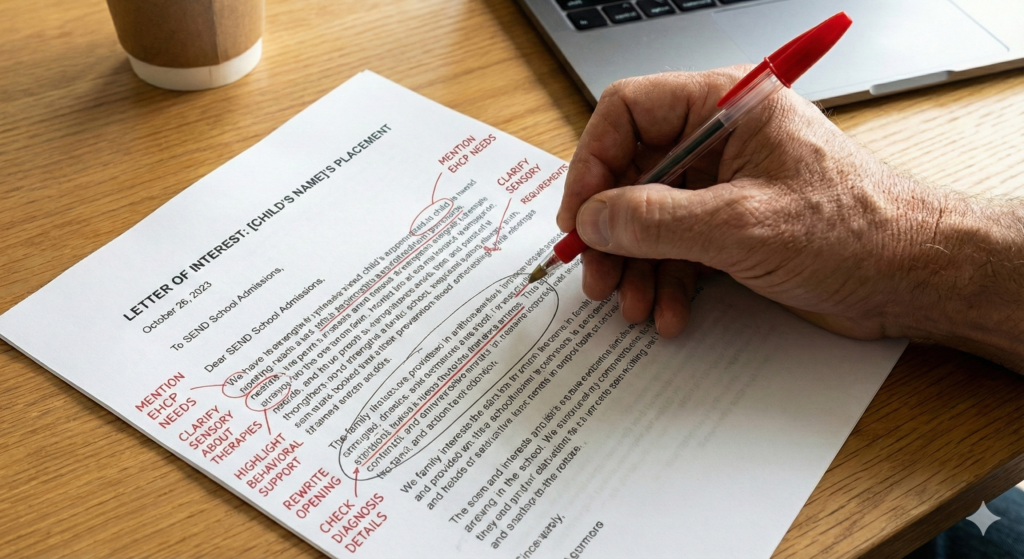
So why fight a tool that helps me navigate the complex neurodevelopmental pathways available to us in the UK? That is just one example of the many ways I use it to support me every single day. For me, AI has evolved from a curiosity into a full-blown special interest. It has become the assistant I never knew I needed, helping me draft letters to potential schools; make sense of complex health needs, and even plan our family holidays so they don’t end in sensory overload. It’s an embedded part of our lives now, and while admitting that feels a bit vulnerable, the positive impact is undeniable.
Navigating the Ethics of the “Out of the Box” Tech
Embracing AI requires a balanced partnership where we acknowledge ethical concerns like copyright and environmental impact while mastering the technology to ensure we aren’t left behind.
I do understand the worries. I really do. The fact that these systems were trained on copyrighted materials without proper recognition or compensation for authors is wrong—there’s no two ways about it. Then there’s the environmental cost; the vast amount of energy and water needed to keep these data centres humming is a significant concern for anyone trying to live ethically.
Adapting to a Changing Work Landscape
And the fear of job replacement? As someone whose work could potentially be automated, that’s a real, cold shiver down the spine. But here’s the thing: the genie is out of the bottle. There’s no stuffing it back in, and I’m not sure there’s much point in fighting against the tide. Instead, I’ve chosen to see this as a partnership. If the landscape is changing, I want to be one of the people who knows how to plant the new seeds. By becoming expert users, we keep the human element alive. After all, AI isn’t perfect; it needs our nuances, our lived experiences, and our “sanity checks” to be truly effective.
How I Use Gemini to Light the Way
To get high-quality results from AI, you must provide structured, detailed prompts while maintaining a critical eye for “hallucinations” and factual accuracy.
I’ve settled on Gemini as my primary go-to—mainly because the integration with the rest of my Google-based life is so seamless—but the principles of a good “digital conversation” apply everywhere. If you’re looking to make this technology work for you, here is how I’ve been doing it:
My Core Prompting Principles
Quality In, Quality Out: Think of the prompt as a recipe. If you give it vague ingredients, you’ll get a bland result. I provide detail, data, and a clear vision of what I want the output to look like.
Pick Your Player: Not every task needs a sledgehammer. I use simpler “flash” models for quick queries and save the advanced reasoning models for the heavy-duty stuff, like deconstructing SEND legislation.
Refine the Experience: Don’t just settle for a block of text. Use the options to generate images for visual learners, deep research for complex topics, or even a canvas document to start your own editing process.
The Human Filter: This is crucial. AI can “hallucinate”—it’s actually designed to be creative, which is where the errors creep in. I always check the output. It’s a collaboration, not a total handover.
An Intersectional Tool for Learning
For the neurodivergent learner, AI offers a judgment-free space to explore special interests and decode the often-opaque systems of modern life.
This technology appeals to my autistic side in the most wonderful way. It’s predictable yet vast. It doesn’t get tired of my questions about niche subjects, and it doesn’t judge me when I need a letter rewritten five times to make sure the tone is “just right” for a formal appeal.

Enthusiasm Without Judgment
I even have a geeky corner in my chats where I can deep-dive into the TV shows, games, and books I love; the AI actually matches my level of enthusiasm, responding with just as much excitement as I have when I’m infodumping about a favourite plot twist or character arc.
Clarity for the Journey
But beyond the “special interest” tag, it has made me a better learner. Whether it’s helping me understand the specific needs of my adopted children or navigating my own health journey, it has provided a level of clarity I used to spend hours searching for. We’re all just trying to navigate this world as best we can—and if a digital partner makes that journey a little brighter, then I’m all for it.
So, jump on board or get left behind? It’s a scary choice, perhaps, but it’s also a huge opportunity. I’m choosing the partnership.
Leave a Reply