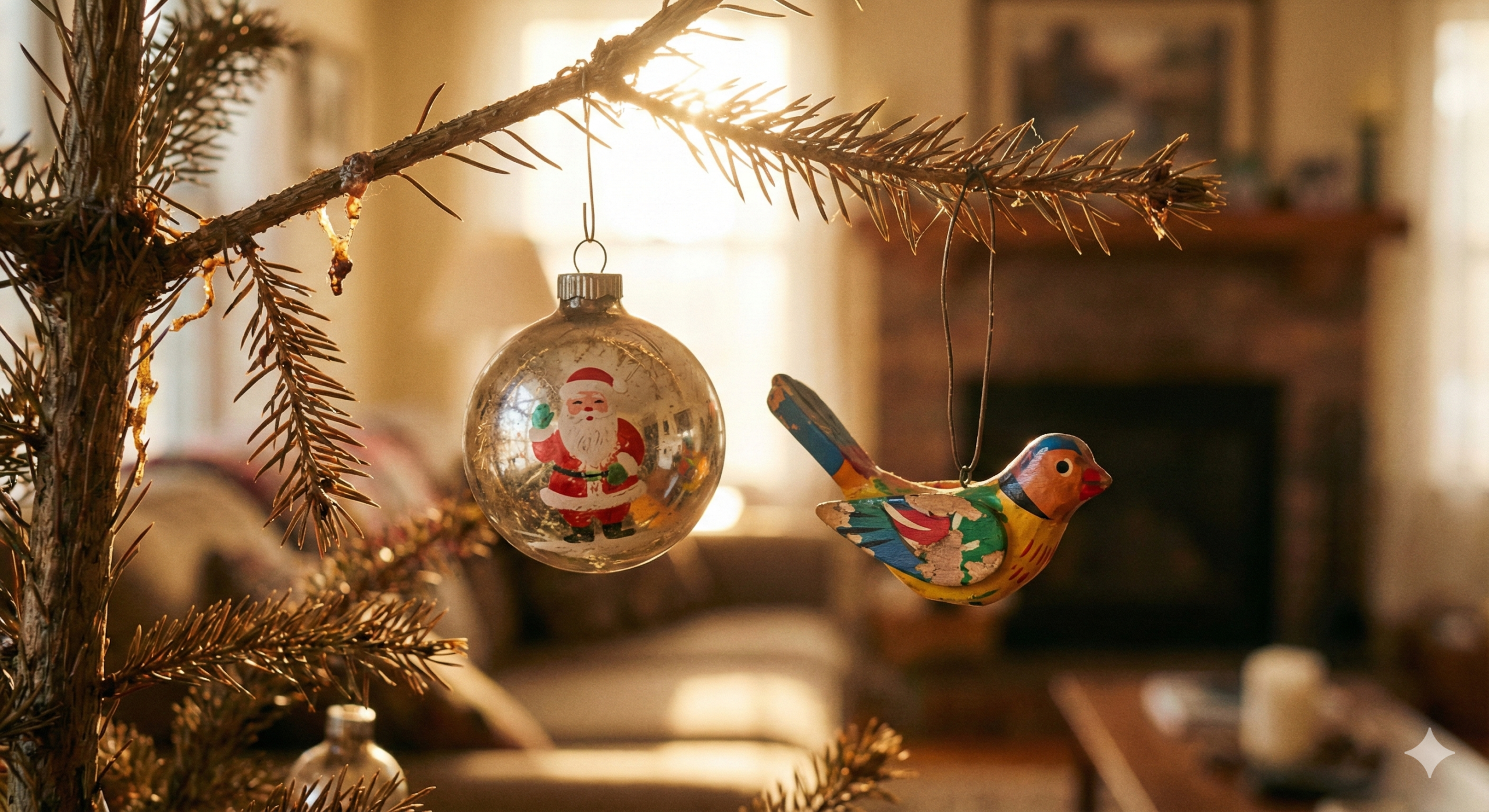
They always say that once you have children, Christmas becomes “magical” again. You’re supposed to see the world through their wide, sparkling eyes, right? Well, for the last four years, I’ve been seeing Christmas through the eyes of a child who has experienced early-life trauma—and let me tell you, that view looks a lot less like a Coca-Cola advert and a lot more like a survival mission.
The Myth of the “Magical” Christmas
As a late-diagnosed autistic man and a parent to two beautiful, dual-heritage adopted children, my perspective on “tradition” has had to shift—not just for my sanity, but for theirs. You see, for a child with traumatic early experiences, the “magic” of Christmas can feel a lot like a threat. When you carry the heavy burden of feeling like you don’t deserve nice things, a season dedicated to “gifts for good boys” is actually quite terrifying.
For the past four years, we’ve had to scale everything right back to the bare bones. I’m talking minimal decorations, almost no festive music, and zero “build-up.” It felt, at times, like we were failing the Christmas script.
When the Festive Script Breaks Down
Last year, the tension peaked on Christmas Eve when our toddler—in a moment of pure, sensory-driven impulse—launched the remote control at the TV. Crunch. I’ll be honest with you: I dysregulated. Hard. I spent the majority of that night in tears, convinced I was an awful Dad, mourning the “perfect” family Christmas that seemed to be actively running away from me. It’s hard to stay regulated when your own neurodivergent needs for predictability clash with the unpredictable nature of trauma-responses.
The Science of Safety: Why the “Naughty List” is a Trauma Trigger
There is a bit of science—and a lot of heart—behind why this happens. When we look through a trauma-informed lens, we see that children who have experienced early adversity often struggle with “rigid thinking.” If they’ve been told (or shown) in the past that they are “bad,” they believe it as an absolute truth.
This is why I’m campaigning to ditch the “naughty list” entirely. For a child with low self-esteem, the idea that their worthiness is being tracked by a man in a red suit is a recipe for a nervous system collapse. If you think you’re inherently “bad,” why even try to be “good”? It’s a cycle of shame that no amount of tinsel can fix.
Reading the Unspoken Signs: Words vs. Nervous Systems
This year, however, the air feels a bit different. Our eldest seems much more at ease with the festive season. He’s relaxed, he’s smiling—he says he’s “fine.” But as an autistic parent, I know that “fine” is a multi-layered word.
We’re checking in regularly and being incredibly careful, because while his words say he’s good, his returning stammer says his body is still on high alert. We know the signs. We are being gentle with him, making sure the demands of the season don’t outweigh his capacity to cope. It’s a delicate dance of neurodivergent intuition and parental protective-mode.
From Perfectionism to Peace: The Story of the Wonky Tree
I’m also learning to be gentle with myself. In my pre-parenting days, I was fairly obsessed with the Christmas tree—every bauble had its precise, aesthetically pleasing place (the autistic need for order is real, folks!). But a toddler, three curious cats, and a house full of complex needs don’t really care about my colour-coordinated branches.
So, the tree is a bit of a state. It’s chaotic. It’s messy. And you know what? I’m not going to allow that to be a source of stress. I might tweak a branch or two in a couple of days, but I’m choosing peace over perfection.
The Strength in Support
Presents are sorted and almost all wrapped—and that is entirely due to my husband. He is an absolute saint who knows exactly how much I struggle with the change in routine. He sees me. He knows that the festive season is a sensory and emotional minefield for me just as much as it is for our son. Having that support allows me to keep my own “internal tree” from toppling over- well completely.
Creating Your Own Way: A Guide to Low-Demand Joy
If you are caring for a loved one who struggles with the holidays, my advice is simple: recognise the struggle and adapt. Christmas doesn’t have to look like a Pinterest board. You get to choose. You get to create your own traditions that actually feel like joy rather than an obligation.
Here are a few things we’ve learned:
- Scale back to the point of comfort: If one string of lights is enough, stop there.
- Discuss boundaries: Talk about what they actually enjoy. Maybe they hate the surprise of gifts but love the vegan nut roast (the one tradition I’ve always held onto!). But honestly? Be flexible enough to allow a festive pizza if that’s what’s going to keep your family happy and regulated. Do what you need to do.
- Ditch the shame: Get rid of any tradition that relies on “being good” or “deserving” things. Everyone deserves a peaceful home.

I realised as I was writing this that I need to practice what I preach. If I can be this compassionate for my son, I can be this compassionate for me staring at a wonky Christmas tree. We are all doing our best, and sometimes, “bare bones” is where the real light shines through.
How are you adapting your traditions this year?
Leave a Reply