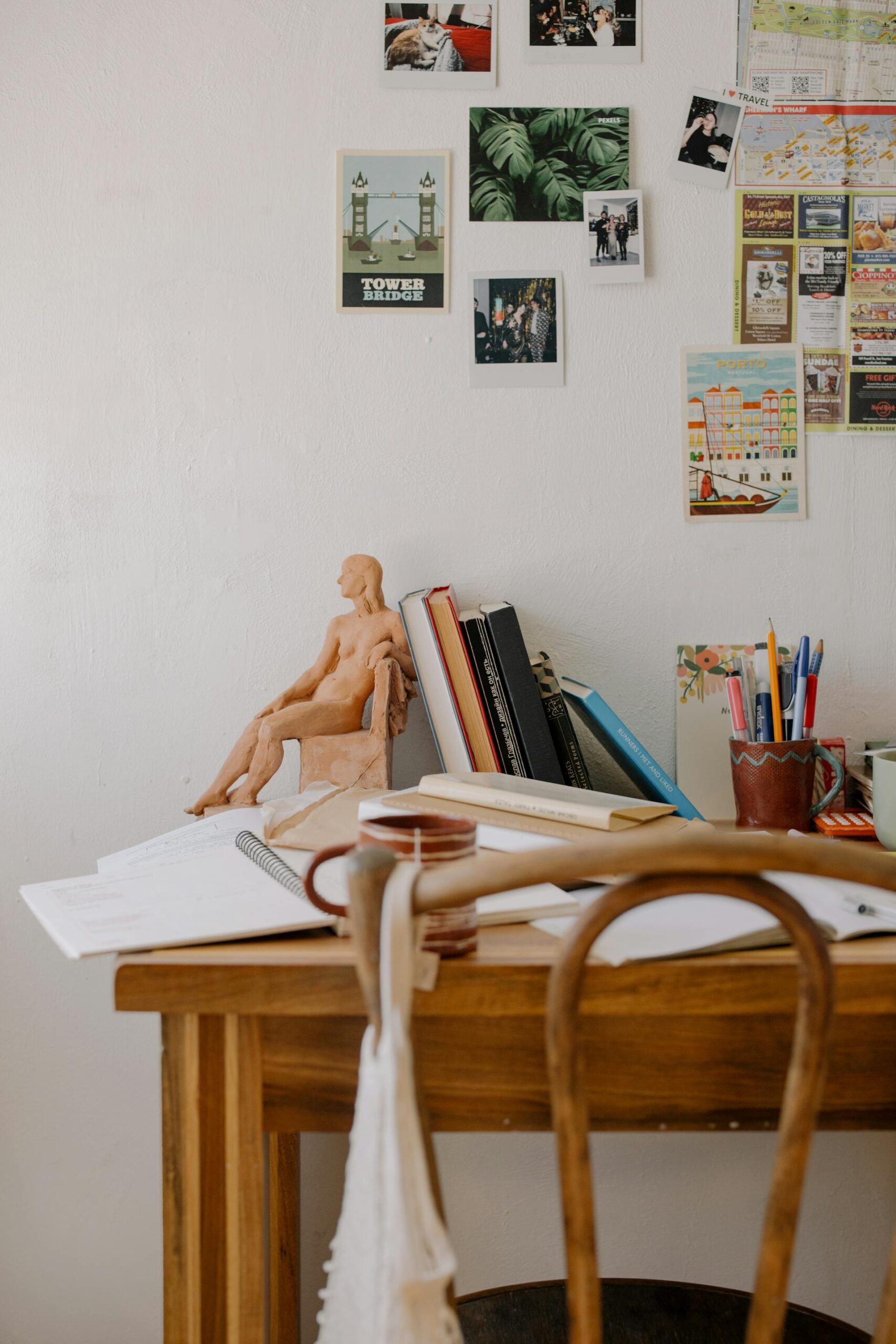
I have a complicated relationship with flat surfaces. To most people, a dining table or a sideboard is a functional piece of furniture. To me, it is a siren call for “stuff.” Within hours of clearing a space, a mysterious selection of half-read books, spare change, out-of-place toys, and forgotten receipts begins to take root.
For a long time, I used this messiness as a stick to beat myself with. How could I crave order so deeply? I even had a bordering on a “special interest” obsession with Marie Kondo’s Spark Joy. Yet I seem to live in a state of perpetual clutter? I loved the idea of a home where everything had its place, a rigid regime of tidiness that satisfied my autistic need for predictability. But the reality? The maintenance felt like trying to hold back the tide with a plastic spade.
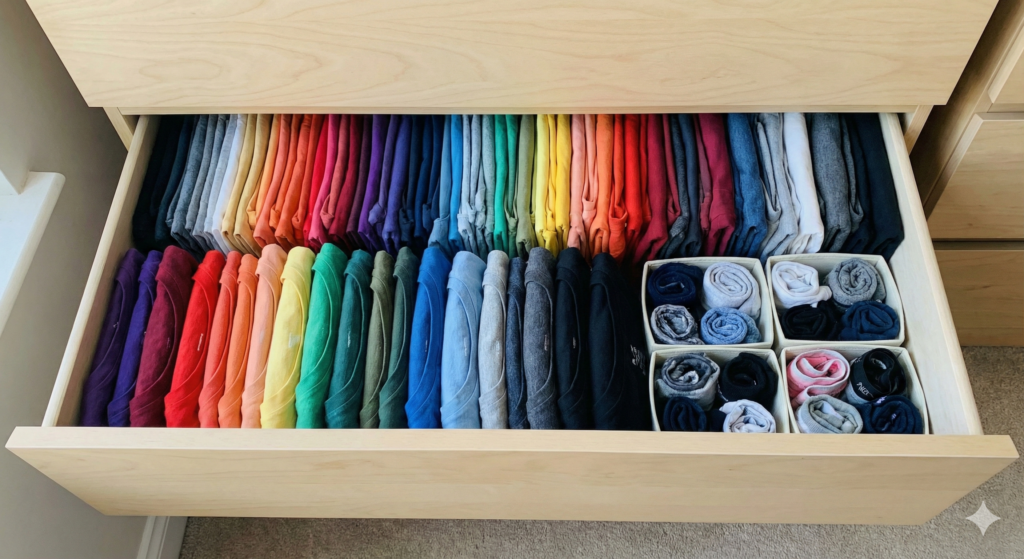
The core reason for neurodivergent messiness isn’t laziness. It is a complex interplay between executive dysfunction, dopamine seeking, and the way our brains process visual stimuli.
The Science of “Mess Blindness”
There is a very real neurological reason why I can walk past a pile of laundry for three days without it registering as a task. It’s often referred to as “mess blindness” or visual habituation. In the ADHD brain, the lack of consistent dopamine means our attention is captured only by things that are novel, urgent, or deeply interesting. A pile of shoes in the hallway isn’t any of those things—it’s just “background noise.”
Mess blindness occurs when the brain stops registering familiar clutter as a problem to be solved. Instead it categorises it as part of the permanent landscape.
But then there’s the “ordered chaos” that served me so well when I was a teacher. I could find a specific document in a literal mountain of paper within seconds. Why? Because it was chronologically ordered in my mind. The mess wasn’t random; it was a physical map of my movements. When I try to force myself to consistenty use use organisation systems—like beautifully ordered folders and filing cabinets—I often lose the visual cues I need to remember things even exist. If it’s out of sight, it’s out of mind.
The Great AuDHD Tug-of-War
Living as a possible AuDHDer (Autistic and ADHD) feels like having two internal managers who hate each other. My Autistic side wants a minimalist, serenity-vibe home where every spice jar is labelled. My ADHD side gets bored halfway through, and leaves the label maker on the floor for a month.
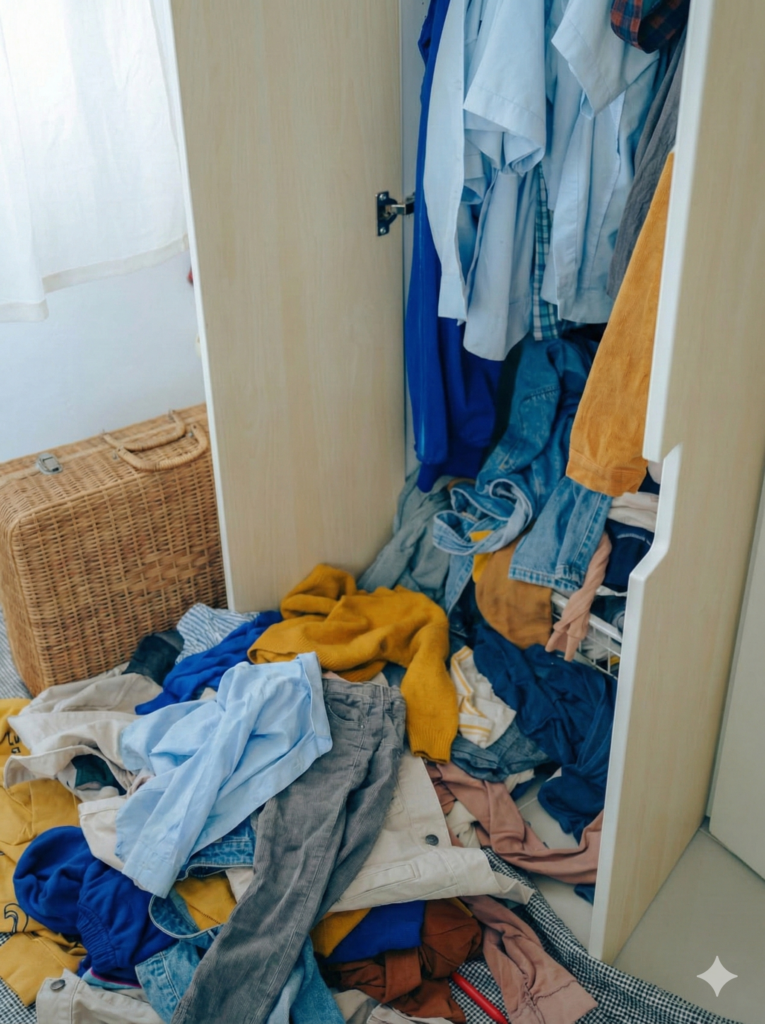
This tension has only grown since becoming a dad. Raising two beautiful, energetic children means the “stuff” multiplier is real. My husband and I are partners in crime here. We both struggle with the same “blindness,” and at least one of our kids is following suit. The inner tension is exhausting: I want the organisation for my sensory peace, but the energy required to maintain it often feels like a mountain I’m too tired to climb.
The conflict between an Autistic desire for structure and an ADHD struggle with consistency requires “low-demand” systems rather than high-effort regimes.
Finding “The Way” Through the Clutter
I’ve had to stop calling myself lazy. Lazy people don’t care; I care deeply—I just lack the “start-up” energy (executive function) to put the shoes away every single time. So, I’m changing the environment to suit the brain, not the other way around.
We are moving towards a “lobbing” system. It’s not about making it look like a magazine; it’s about making it functional. I’ve realised that if a system requires more than two steps (e.g., open wardrobe, find hanger, hang coat), it won’t happen. So, we’re getting boxes. Big, beautiful, sturdy boxes in the hallway. One for each of us to simply “lob” our shoes and coats into. It might not be “Kondo-approved,” but a box of shoes looks a lot better than a minefield of trainers across the rug.
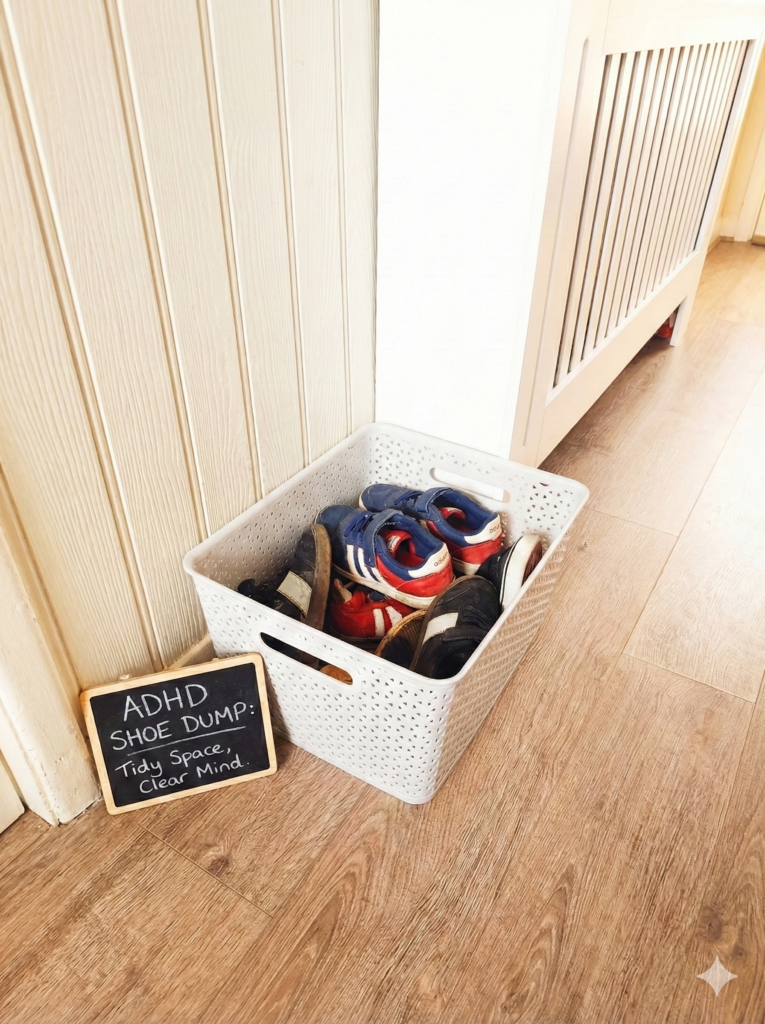
To manage neurodivergent clutter, we must reduce the “friction” of tidying by creating one-step storage solutions that work with our natural movements.
Gamifying the Boring Stuff
How do I actually get the motivation to start? I’ve found that I need to “trick” my brain into the dopamine hit. I use music as a transition tool—I’ll tell myself I only have to tidy for the duration of two upbeat songs. It’s amazing what you can clear when you’re racing a bassline.
I’ve also started using an app called Tody, which breaks down chores into manageable chunks. It takes away the “what do I do first?” overwhelm that usually leads to me sitting on the sofa staring at the mess in a state of frozen panic. For my son, I use “Body Doubling.” I don’t just tell him to tidy his room; I sit in there with him. I’ll gently tidy one corner while he does another. Sometimes, I’ll give him a specific “quest”: “Can you find all the blue things and put them in this bin?” It turns a terrifying mountain into a scavenger hunt.
We’re still in the middle of it. The stairs were covered in Christmas toys until well into January, and there’s probably a “doom pile” of mail on the sideboard as I write this. But I’m learning to be easy on myself. Our home is full of love and two happy kids. If the price of that is a few “horizontal surfaces” being reclaimed by the chaos, I think I can live with that.
Leave a Reply